This summer, my oldest daughter will graduate from university. My son just finished his sophomore year of high school, and my youngest is getting ready to begin her last year of middle school. Two members of Gen Z (kids born 1997–2012) and one of Gen Alpha (those born 2013–2025) are growing up in my home and share a place at our dinner table.
My husband and I feel the real challenges of helping them love and know the Bible in an era when mobile devices, social media and interactive games compete for their attention, youth sports demand their weekends, and alternative cultural narratives about what is true and good tempt them to doubt God’s Word. At the same time, we’ve seen the strength, creativity, curiosity, and faithfulness of these teens and young adults who came of age during COVID, are digital natives, and will be navigating life in the dawn of the AI era.
These days it can be challenging for many ministry leaders to know how to connect with Gen Z and Gen Alpha. It may be tempting to focus on the challenges and barriers to developing Bible literacy in these generations rather than the opportunities of serving this group of emerging Christian leaders. The fallout on this generation from the explosion of dependence on digital technologies from fragmented attention spans to social anxiety has been well documented by authors like Jonathan Haidt in The Anxious Generation. But there are signs of hope too.
Barna Research recently reported that there has been a resurgence of weekly Bible reading among Gen Z, with 49% reporting they read the Bible weekly in a 2025 survey—that’s an increase of 19% compared to the previous year!1 Gen Z is reading the Bible, but do they understand what they’re reading? Will this trend be sustained over time? Only if this generation is trained to become Bible literate.
Bible literacy is about more than familiarity with isolated Bible verses or stories. It entails awareness of the entire story of scripture from Genesis to Revelation, appreciation for the inspiration and authority of every book in the Bible, and the ability to comprehend and interpret passages in context of the full story with sensitivity to genre and historical and cultural context. All this is not just with the aim of growing in knowledge, but with the goal of becoming more like Jesus, of living a life that bears spiritual fruit and is engaged in the mission of God.
Here are five important steps to help Gen Alpha and Gen Z become Bible literate:
- Start with the why. Gen Alpha and Gen Z are constantly being sold something. Everywhere they look, on every platform they engage with, they’re being marketed to as consumers. But we don’t consume the Bible; we’re formed by it, and the posture we take when reading and learning Scripture matters. If you want to encourage teens and young adults to give the time and effort required to grow in Bible literacy, help them understand why the work they do to engage Scripture matters to their relationships with God, their understanding of their God-given identity and purpose in the world, and to their friendships and relationships with other people. Bible literacy is not just about acquiring knowledge; it’s about becoming the human beings God created us to be.
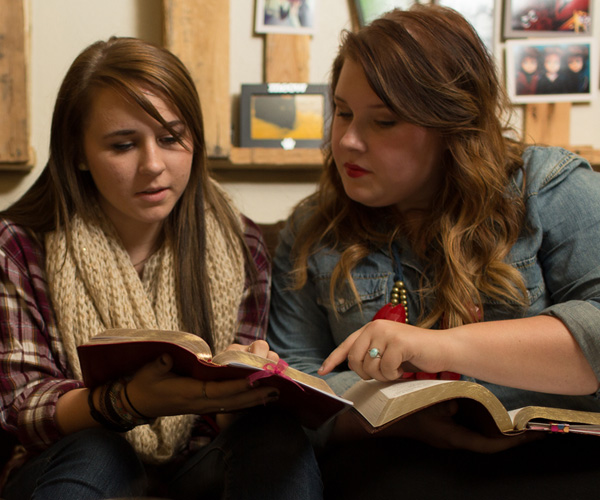
- Help them find their place in a community of Bible readers. In findings from a national survey by Cigna, Gen Z is reportedly the loneliest generation.2 More than half of Gen Z adults ages 18–22 identified with ten out of eleven feelings associated with loneliness. Traditional discipleship has often emphasized solo daily Bible reading, but this generation will find more sustained Scripture engagement by reading and studying the Bible together in community. Never underestimate the power of the living and active Word of God read aloud together with a group. And if reading together regularly isn’t an option, then consider texting a question about a text or an insight about a passage to a group chat to encourage dialogue and accountability without judgement.
- Coach them on how to use digital tools wisely to facilitate Bible reading and learning. If you are holding your phone, then you are holding access to the Bible in a dizzying array of translations—in text and audio. You have access to Bible commentaries, articles, research that previous generations never dreamed of. Apps like You Version, Lifeway On Demand that features a free audio version of the CSB Bible, and sites like Blue Letter Bible enable you to take scripture with you wherever you go and engage with it throughout the day.
- Introduce the whole story of Scripture before diving into individual books. The story we believe about the world shapes our perceptions of what is true and meaningful. Whether you’re serving teens or young adults, make sure they are introduced to the coherent story of the Bible from beginning to end, from creation and fall to redemption through Christ and His second return and the consummation. Knowing the story will help them know where individual texts fit into that story and encourage them to understand Scripture in the context of redemptive history. Chronological Bible teaching or chronological Bible reading is an effective way to introduce students and young adults to the story of Scripture as a sequential and interconnected narrative.3
- Don’t separate building Bible literacy from fostering real relationships with Gen Z and Gen Alph. In the era of AI, students have immediate and unlimited access to information, but not to relationships with people who see, know, and love them. Ideally, learning about the Bible and about God’s good plan and mission for humanity should happen within human community, in relationships that are stable and nurturing. Gen Z and Gen Alpha have a preference for dialogue over one-way instruction. Dialogue encourages an active learning posture rather than a passive one, and it requires conversation in the context of trusting relationships. Again and again, the Bible encourages one generation to tell of the works of the Lord to the next (Ps. 78:4; 145:4). A machine cannot testify to the meaning of God’s work in its life the way that you can help young adults understand the way the Bible applies to their lives because it has transformed your own.
For most of Christian history, becoming Bible literate did not require the ability to read. Up until Johannes Gutenberg invented the printing press in the 15th century, few faithful Christians had access to the written texts of the Bible. They learned Scripture through hearing it read and repeated, through recitation of the psalms, and through exposure to the Old and New Testament readings and preaching in corporate worship.
If we believe that God has revealed Himself through His inspired Word, then Bible literacy is an integral, essential aspect of healthy discipleship. We are conformed to the image of Christ as His Word dwells richly within us.
About Tina Boesch

Tina Boesch has lived in seven countries on three continents. She earned a MA in theology at Regent College in Vancouver, British Columbia. These days she serves as Manager of the Lifeway Women Bible Study Publishing Team. She’s the author of Given: The Forgotten Meaning and Practice of Blessing and has designed stained glass windows for Southwestern Baptist Theological Seminary and North Greenville University. You can find more of her writing and design at tinaboesch.com.
1. “How Millennials and Gen Z Are Driving a Bible Reading Comeback,” Barna Research, November 6, 2025, https://www.barna.com/trends/bible-reading-trends/.
2. “Are You Feeling Lonely?” Cigna: News and Insights, 2018, https://www.cnbc.com/2018/05/02/cigna-study-loneliness-is-an-epidemic-gen-z-is-the-worst-off.html
3. “Chronological Bible Teaching,” CBT, https://chronologicalbibleteaching.com/.