I knew I wanted to be a mother from a young age. My father told me that I comforted other children who were crying in the nursery. Somehow, I earned the nickname “Mommy Jessi” in middle school (maybe because I was bossy?). In high school and college, all I could dream about was the future day when my prince would come and we could begin our happily ever after, complete with a house with a picket fence and two lovely children.
When my husband and I first met, we discussed adoption on our very first date! However, we assumed that we would adopt down the road when we were done having “our own” kids. But a journey through infertility led us to consider other ways to grow our family. When we learned of the foster care crisis within our state and nation, we were challenged and convicted to step into this heavy and inconvenient, yet rich and rewarding calling.
Various programs within our church often serve mothers through Mother’s Morning Out, Bible studies with childcare, and so forth. But foster mothers have a distinct role to play within the body of Christ. When a woman steps into foster care, she is saying yes to being a stand-in for another woman’s child. This calling is difficult, complicated, and nuanced, with various trials that differ from traditional parenting.
For instance, when asked, “How many kids do you have?” a foster mother may hesitate and not know how to give a simple answer. She may have had three children last month, but five children this month. The demands of a traditional mother are also compounded by the responsibilities of a foster mother. There are court hearings, visitations, therapy appointments, and so much more. So, how does the church come alongside the foster mother? How can the church help her feel seen?
It may seem overwhelming and complicated, but it is quite simple.
1. Provide a time and place for foster mothers (and fathers) to gather and connect.
The unique challenges of foster mothers are not easy to talk about amongst those who have not stepped into this calling. It can feel scary to talk about the complex emotions we feel, the difficult behaviors occurring in our home, and the pressures we face. Providing a time and place—ideally with childcare because it is hard to find babysitters for kids in foster care—is invaluable. When a foster parent walks into a room of other foster parents, there is an unspoken understanding and a feeling of “You get me.” This allows foster parents to feel less alone and garner the encouragement they need to keep going.
2. Encourage others within the church to use their unique gifts to help the children in the home.
Whether there is one child or three or ten in the home, each one of those children has interests specific to them. Sometimes it can feel overwhelming to a foster mother to try to figure out how to encourage those interests on top of her other responsibilities. There was a season when an older woman allowed my then foster daughter (who is now my forever daughter) to attend her sewing camp she put on for other children and be her helper for the camp. She welcomed her into her home, allowing her to flourish and let her creative juices flow. My daughter not only enjoyed doing something she enjoyed, but she was also able to do it with other children and have a sense of leadership as she helped. This was invaluable to me as a foster mom—I got a little break, but I also saw her cup filled by others in the body of Christ who were loving on her. Do you know how to bake? Sew? Craft? Play a sport? Use that passion to come alongside a child in care who is desperate for someone to pour into them and show them they matter.
3. Meet the tangible needs of families.
This one can be a little tricky, because oftentimes people assume the easiest way to bless children in foster care is the best way—through gifts. While new bikes at Christmas and toys for the stockings are exciting and fun, oftentimes children in care are chock-full of material items from local ministries but lacking on relationships. (See above point.) Instead of assuming the family may want more toys, ask if there is anything they actually need. For instance, when we first began fostering, we assumed we would have younger children live with us, so we had a crib in our foster room. However, instead we had three elementary-aged children. Within the span of a weekend, people from our church gave us a bunk bed, a twin bed, and other furniture for their rooms. Most of us have something tangible we can give that is a true need and won’t add to the stack of toys children receive. Clothing is also a huge need because oftentimes the county’s allowance for children’s clothing will only go so far, and as you know, children grow!
The biggest blessing we could count on each week was a meal from a family in our church. We had a care team of people assigned to our family that rotated the weeks they brought us a meal. Knowing that I didn’t have to worry about dinner on Tuesday night was a priceless gift. If cooking isn’t your thing, that’s OK—restaurant gift cards work well, too.
Being a foster mother is difficult, to say the least. Understanding how to care for the needs of the children in your home can surpass the need to care for yourself. But within the body of Christ, we each have unique gifts that can be used to build one another up. When you serve a foster mother, you are coming alongside a vulnerable family and enabling them to receive the gift of stability in order to help them reunify and find healing. God’s heart is for the family to be together, and when we serve a foster family, we are walking hand in hand with His mission for His people. Whether you are a mother or a woman who simply wants to bless another family, you have a place in caring for foster mothers and their children, no matter how small the task may seem.
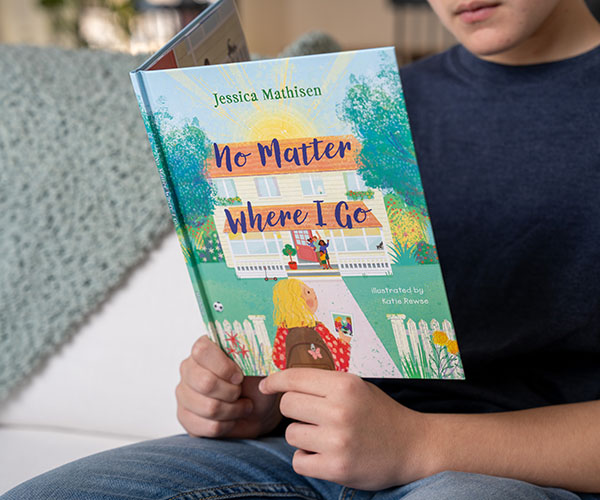
To read more from Jessica Mathisen on foster care, check out her kids’ book, No Matter Where I Go.
ABOUT JESSICA MATHISEN

Jessica is a former elementary school teacher and a foster, adoptive, and bio mom whose passion is to communicate God’s love to others through words and relationships. Her greatest joy is helping people know and love God’s Word. She lives just outside of Atlanta, Georgia, with her husband and three kids. You can get to know her at jessicanmathisen.com, on Instagram @jessicamathisen, or through her podcast, The Fullness of Joy.